
A week after a bomb blast killed 13 people outside the court, the Delhi high court on Wednesday asked the Centre as well as the state government to come out with a scheme with regard to grant of compensation to the family of the victims.
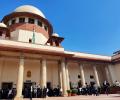
A bench of Justices Sanjiv Khanna and SVN Bhatti said the apex court has already defined hate speech and the question now is of implementation of its directions.

Writing his views in a separate verdict while concurring with the opinion of Justice Sanjiv Khanna, who was heading the bench, Justice Datta said the question of reverting to "paper ballot system", on facts and in the circumstances, does not and cannot arise.
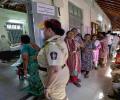
The Supreme Court on Monday sought the Election Commission's response on a PIL challenging its decision to increase the maximum number of voters from 1,200 to 1,500 at every polling station, saying no elector should be excluded.
A bench of justices Sanjiv Khanna and S P Garg allowed National Investigation Agency's plea against the trial court order, which had dropped stringent penal charge of 'waging war against the government' against Malik, who is facing trial in the September 7, 2011 attack case, in which 15 people were killed and 79 others were injured.
The Supreme Court of India will hear a plea from the mosque management committee challenging an order rejecting its petition in the Krishna Janmabhoomi-Shahi Idgah dispute in Mathura, Uttar Pradesh on January 15. The Allahabad High Court had rejected the mosque committee's plea, stating that the religious character of the Shahi Idgah mosque needed to be determined. The case involves claims that the mosque was built after the demolition of a temple, a claim disputed by the mosque committee. The Supreme Court will now decide on the maintainability of the mosque committee's plea.
The court had passed the interim order on Tuesday on a petition filed by Nimbus Communication Ltd, suggesting deferred telecast as an interim arrangement to end the fighting between the two broadcasters.
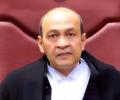
A video and inquiry report have raised questions about the Delhi Fire Services' claim that no cash was found at the official residence of Delhi High Court judge Justice Yashwant Varma during a fire incident on March 14. The video, which has gone viral on social media, shows fire fighters dousing flames on articles that appear to include half-burnt Indian currency notes. The Delhi High Court Chief Justice has initiated an in-house inquiry against Justice Varma and the Supreme Court has proposed his transfer to the Allahabad High Court.
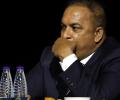
A former cricketer, Devajit Saikia represented Assam in four first-class matches during the 1990s before transitioning to cricket administration.

To enhance transparency and verifiability in the poll process, the Conduct of Election Rules, 1961 were amended in 2013 to introduce the use of VVPAT machines. They were first used in the by-election to the Noksen assembly seat in Nagaland.
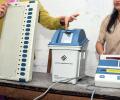
The Supreme Court of India has sought a response from the Election Commission of India (ECI) regarding pleas seeking verification of burnt memory and symbol loading units in Electronic Voting Machines (EVMs). The court directed the ECI to refrain from erasing or reloading data during the verification process and to explain the procedure adopted for verification. The bench also expressed concerns over the high cost of verification and directed the ECI to reduce the fee. The court's directive comes following its previous judgement where it allowed aggrieved candidates to seek verification of EVMs.
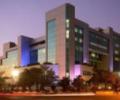
The Delhi High Court on Thursday said the National Stock Exchange was a public authority and was bound to reveal information under the Right to Information Act.
A special tribunal has issued notices to the Students Islamic Movement of India, its chief Safdar Nagori and two other functionaries of the banned outfit, asking them to explain why the organisation and its activities should not be declared 'unlawful'. A single-member tribunal headed by Justice Sanjiv Khanna of the Delhi high court has asked SIMI, its president Safdar Nagori, finance secretary Imran Ansari and president of the outfit's Madhya Pradesh zone.
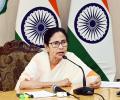
West Bengal Chief Minister Mamata Banerjee has defended her support for teachers who were dismissed following a Supreme Court verdict, accusing the BJP and CPI(M) of "hatching a conspiracy" to influence the ruling. She dared the BJP to arrest her for supporting the affected candidates, while asserting that her government will abide by the verdict but explore all legal options. The development has triggered political reactions with the BJP demanding Banerjee's resignation, while the CPI(M) expressed concern over the impact on the education system. Banerjee also criticized the BJP's handling of the Vyapam scam in Madhya Pradesh, drawing parallels to the school jobs scam in West Bengal.
The Delhi high court directed the Centre and Foreign Investment Promotion Board on Friday to complete within two months, an inquiry into Hong Kong-based Hutchison Telecom allegedly holding more than the permissible 74 per cent stake in Hutch-Essar.
The Delhi High Court on Thursday rejected the government's plea that Cabinet papers containing the deliberations of the ministers cannot be disclosed under the Right To Information Act, even after a decision has been taken by it on an issue.

The West Bengal Board of Secondary Education (WBBSE) has appealed to the Supreme Court to modify its order annulling over 25,000 jobs in schools. The board argues that the termination of 11.3% of existing teachers would have a devastating impact on schools in the state and impact the education of over 78.6 lakh students. The WBBSE is seeking to allow untainted candidates to continue in service until the end of the academic year or until the process of fresh appointments is concluded, whichever is earlier.
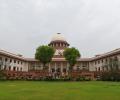
The Indian government has defended the Waqf (Amendment) Act, 2025 in the Supreme Court, arguing that there cannot be a blanket stay on the law as there is a presumption of its constitutionality. The Centre countered the pleas challenging the law's validity, asserting that the amendments were undertaken after a comprehensive study by a parliamentary panel. The government also highlighted the "reported misuse" of earlier provisions and the increase in waqf land, claiming that over 20 lakh hectares were added after 2013.

Chief Justice of India Sanjiv Khanna has recommended the impeachment of Allahabad High Court judge Yashwant Varma following an investigation into a cash discovery incident at his residence. The recommendation follows a report by a Supreme Court-appointed committee that confirmed allegations of cash discovery against Justice Varma. The CJI's recommendation is based on the established in-house procedure for dealing with allegations against judges of constitutional courts.

The Centre on Thursday assured the Supreme Court that it will neither denotify Waqf properties, including "Waqf by user", nor make any appointments to the central Waqf council and boards till May 5.
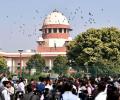
Justice Gavai's comment came while the apex court bench, also comprising Justice Augustine George Masih, was considering a fresh plea seeking an inquiry into the recent violence in West Bengal during anti-Waqf law protests.

The review pleas filed by advocate Mathews J Nedumpara and others contended that the matter related to the scheme falls in the exclusive domain of legislative and executive policy.

The Supreme Court on Tuesday listed for the second week of July a plea by jailed former Maharashtra minister and Nationalists Congress Party leader Nawab Malik against a Bombay high court order putting off the hearing on his bail plea in a money laundering case lodged by the Enforcement Directorate.

Quraishi asserted that India has, is and will always stand up and fight for its constitutional institutions and principles.
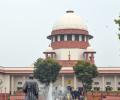
In a significant development, the Supreme Court on Tuesday asked the Election Commission of India to provide details of cases in which it had either removed or reduced the period of disqualification from electoral rolls of leaders post their conviction in criminal cases.
A plea in the Supreme Court of India seeks a direction to Delhi Police to lodge an FIR over the alleged discovery of semi-burnt stash of cash from the official residence of Delhi High Court judge Yashwant Varma. The plea challenges a 1991 judgement that prohibits criminal proceedings against judges without prior consent from the Chief Justice of India, arguing it violates the principle of equality before the law. It also seeks to declare the collegium's 3-member committee investigating the incident as having no jurisdiction and calls for action against corruption within the judiciary.

The Supreme Court on Thursday questioned the Centre over the procedure adopted for the appointment of election commissioners and asked how six names were shortlisted from 200 within a few hours.
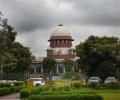
The Supreme Court of India will likely hear a batch of petitions challenging the constitutional validity of the Waqf (Amendment) Act, 2025 on April 15. The Act, which came into force on April 8, has been met with widespread criticism from various stakeholders, including politicians, the All India Muslim Personal Law Board (AIMPLB), and Jamiat Ulama-i-Hind. They argue that the law is discriminatory and violates the fundamental rights guaranteed under Articles 25 and 26 of the Constitution. The petitions allege that the amendments give the government more control over the administration of Waqf, effectively sidelining the Muslim minority from managing their own religious endowments.

The Supreme Court on Tuesday reserved its judgment on the issue of the grant of reservation in promotion to the Scheduled Castes and the Scheduled Tribes in government jobs.
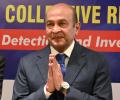
The Supreme Court addressed concerns about misinformation spreading related to an incident involving Delhi High Court judge Justice Yashwant Varma. The court clarified that the proposal to transfer Justice Varma to Allahabad High Court was independent of an internal investigation into the discovery of a large sum of cash at his residence following a fire. The Delhi High Court Chief Justice is conducting the investigation and will submit a report to the Chief Justice of India today.

The Supreme Court of India began hearing a batch of petitions challenging the constitutional validity of the Waqf (Amendment) Act, 2025. The bench, led by Chief Justice Sanjiv Khanna, asked both sides to address whether the court should entertain the petitions or relegate them to the high court. The hearing is underway with senior advocate Kapil Sibal arguing for the petitioners. The act, which was passed by Parliament following heated debates, has been challenged by various parties including AIMIM leader Asaduddin Owaisi, All India Muslim Personal Law Board (AIMPLB), and Jamiat Ulama-i-Hind.
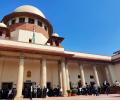
A bench of Justices Sanjiv Khanna and Dipankar Datta gave liberty to petitioners Internet Freedom Foundation and Criminal Justice and Police Accountability Project, who had jointly filed the petition, to approach the high court.

A three-judge Supreme Court bench will hear petitions challenging the constitutional validity of the Waqf (Amendment) Act, 2025, on April 16. The petitions, including those by politicians and the All India Muslim Personal Law Board (AIMPLB) and Jamiat Ulama-i-Hind, were filed in the top court challenging the validity of the newly-enacted law. The Centre has filed a caveat in the apex court, seeking a hearing before any order is passed.

According to the cause list of July 10 uploaded on the apex court website, a five-judge bench headed by Chief Justice DY Chandrachud would consider in chambers the pleas seeking review of the October 17 last year verdict.
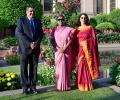
Four days after the top court cleared 10 bills, which were stalled and reserved by Tamil Nadu Governor R N Ravi for the president's consideration, and set a timeline for all governors to act on the bills passed by the state assemblies, the judgement running into 415 pages was uploaded on the apex court's website at 10.54 pm on Friday.
Justice Khanna said all the intervention applications filed on the issue will also be taken on April 16 when the final hearing will take place.
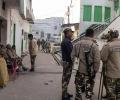
A four-member team from the Archaeological Survey of India (ASI) conducted a survey of the recently-discovered Shri Kartik Mahadev temple, five pilgrimage sites, and 19 wells in Sambhal, Uttar Pradesh, India. The survey followed the discovery of three damaged idols inside a well of the Bhasma Shankar temple, which was reopened after being shut for 46 years. The Shri Kartik Mahadev temple, also known as the Bhasma Shankar temple, was reopened on December 13 after authorities found the covered structure during an anti-encroachment drive. The temple houses an idol of Lord Hanuman and a Shivling and had remained locked since 1978. The district administration has requested carbon dating of the temple, including the well, from the ASI. Meanwhile, the Supreme Court has restrained courts across India from entertaining new lawsuits or passing any orders in pending ones seeking to reclaim religious places, especially mosques and dargahs, until further notice. This action halts proceedings in approximately 18 lawsuits filed by Hindu parties seeking surveys to determine the original religious character of 10 mosques, including the Gyanvapi at Varanasi, the Shahi Idgah Masjid at Mathura, and the Shahi Jama Masjid at Sambhal, where four individuals died in clashes. The Supreme Court will examine the legality, scope, and boundaries of the Places of Worship (Special Provisions) Act, 1991, which prohibits the conversion of places of worship and ensures the preservation of their religious character as it existed on August 15, 1947.

The top court said that a sum of Rs 50 crore lying with the RBI for the victims shall be utilised by the Union of India to satisfy pending claims of victims.
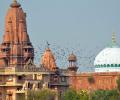
The Supreme Court refused to stay Allahabad high court's December 14 order which allowed the primary survey of the Shahi Idgah complex adjacent to the Shri Krishna Janmabhoomi Temple in Uttar Pradesh's Mathura by a court-monitored three-member team of advocate commissioners.

After perusing the transcript of the statements given in the interview, a bench of Justices Sanjiv Khanna and Dipankar Datta observed, "Prima facie, there is no hate speech. No case is made out."
 © 2026 Rediff.com - Advertise with us - Disclaimer - Privacy Policy - Sitemap - Feedback - About us - Terms of use - Grievances